Ever Wonder How the Harasser and Bully Think Different?
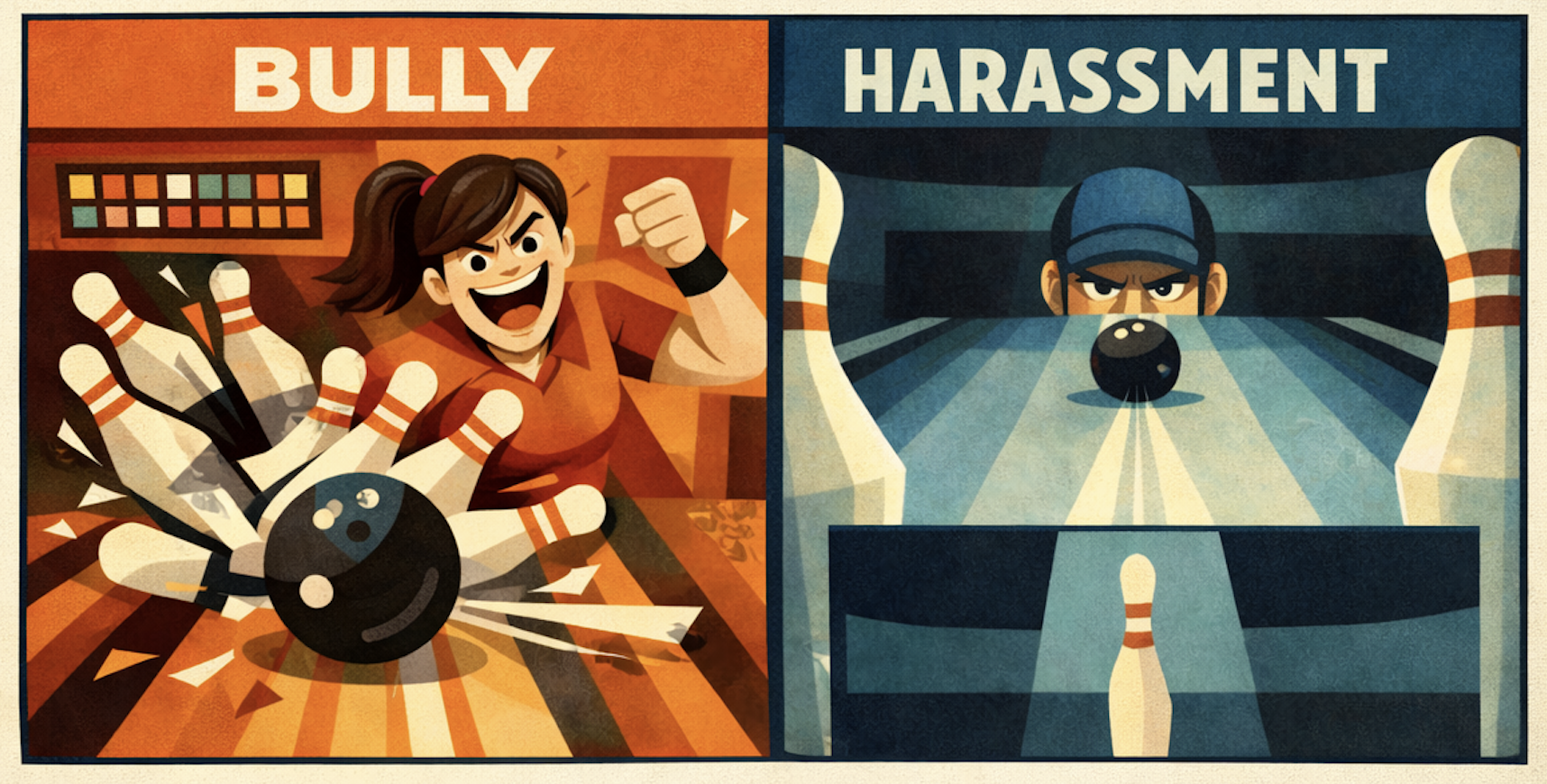
At first glance, bullying and harassment can feel like twins wearing different jackets—similar behaviors, same discomfort, same damage.
But underneath the surface, their thinking patterns move in very different directions. And understanding that difference is where awareness turns into prevention.
Let’s step into their mindset for a moment.
The Bully: Power in the Moment
A bully operates like someone chasing impact—fast, emotional, and driven by the need to win right now.
What drives them:
Immediate control or dominance
Emotional release (frustration, insecurity, stress)
A need to feel stronger in the moment
How they think:
“I need to win this interaction.”
“If I push harder, I stay on top.”
“This makes me feel better right now.”
Behavior pattern:
Often impulsive
Targets may change depending on situation
Focused on reaction, not long-term impact
In short: Bullying is reactive power.
The Harasser: Control by Design
A harasser plays a different game—more calculated, more targeted, and often sustained over time.
What drives them:
Control over a specific individual or group
Reinforcement of bias, entitlement, or belief
Ongoing psychological influence
How they think:
“This person needs to be put in their place.”
“I can keep this going without getting caught.”
“This behavior is justified.”
Behavior pattern:
Repetitive and targeted
Often subtle or disguised
Persistent over time
In short: Harassment is intentional control.
The Core Difference
Here’s the distinction that matters:
Bullying is explosive.
Harassment is persistent.
One is about the moment. The other is about the pattern.
Why This Matters in the Workplace
This isn’t just semantics—it directly impacts how organizations respond.
Bullying may call for coaching, accountability, and leadership intervention
Harassment requires immediate, formal action due to legal and ethical risk
Mislabeling these behaviors can lead to underreacting—or responding in ways that miss the real issue entirely.
When It’s More Than a Conversation
If you’re seeing patterns in your workplace and wondering:
“Is this crossing the line into harassment?”
“Are we responding appropriately?”
“Do our leaders even know how to handle this?”
That’s where support matters.
Your HR Guru provides:
Workplace harassment investigations
Leadership guidance and risk-based decision support
Harassment prevention training tailored to your organization
Policy and compliance alignment across complex state requirements
This isn’t just about compliance—it’s about protecting your people, your culture, and your organization.
Let’s Connect
If your organization needs support navigating harassment concerns or building stronger, safer workplace practices, I’m here to help.
Start by booking a call here --> https://calendly.com/pattye-yourhrguru/information-meeting
or visiting www.YourHRGuru.com to learn more about Your HR Guru.